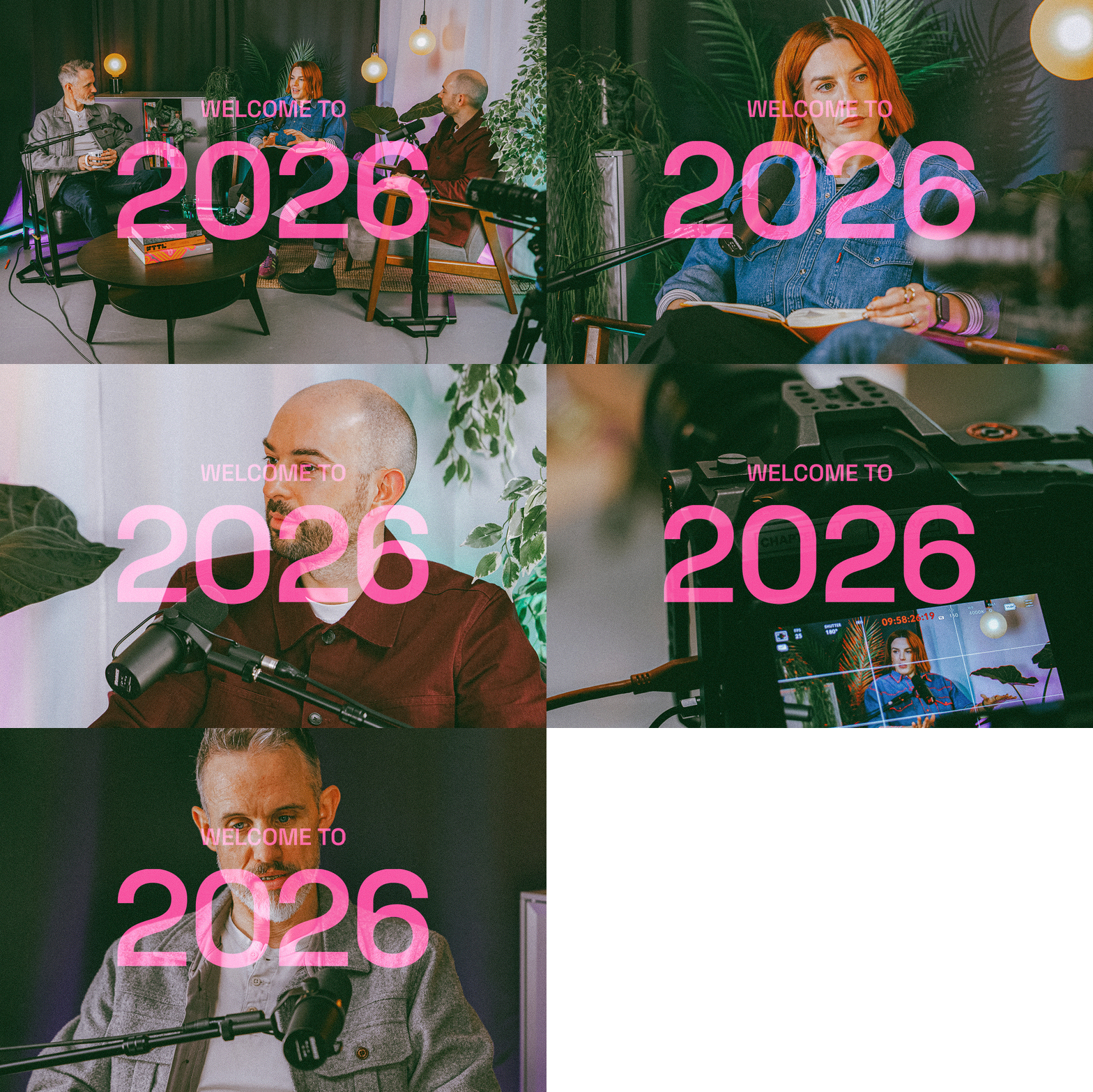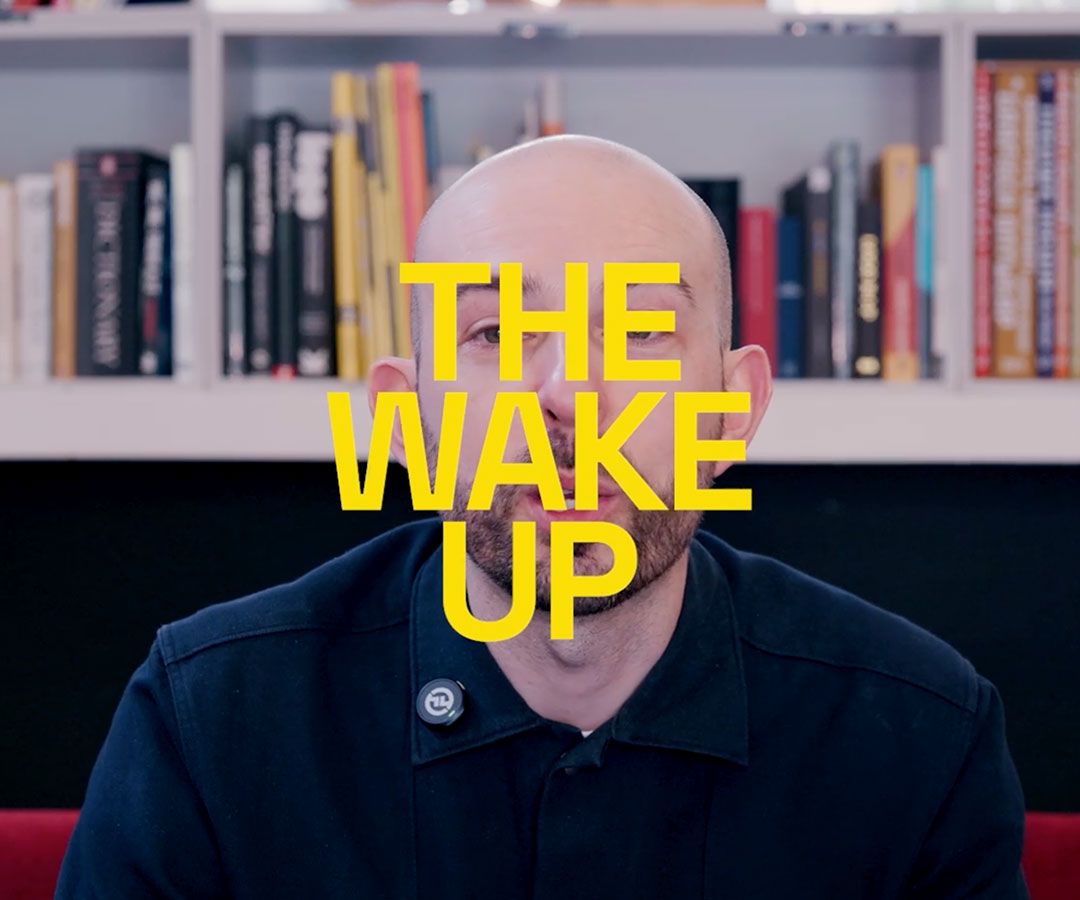
Hi, I'm Chris Skelton, Creative Director at ThreeTenSeven and this is The Wake Up. A fortnightly dose of health tech news and creative inspiration from West Yorkshire and beyond to help you kick start your week.
The Wake up has been around in a few different guises for us over the years — usually in the form of a Monday morning team meeting — but today I thought I'd try a different format and share our favourite stories more widely.
Let me know if you think it's interesting and maybe I'll do a few more!
Anyway, six stories this week — three on health tech, three on the creative work that’s shaping it.
Starting close to home. Leeds spin-out Asclepius Medtech has just won £100,000 from the Mayor's Big Ideas Challenge — a regional programme that backs businesses tackling health inequalities across West Yorkshire.
Their product is SurgFit: a small biosensor patch worn on the chest that collects continuous health data for up to seven days ahead of surgery — cardiac rhythm, activity levels, the kind of information that normally means three separate clinic visits. The patient does it at home. An app handles the data transfer and daily check-ins and everything feeds straight to the surgical team.
The result: fewer pre-op clinic visits, less travel for patients, and more continuous data for the surgical team than a single appointment can provide. One to watch out for.
At Digital Health Rewired in Birmingham last week, the Pitchfest was won by Daye — a women's health biotech that has pulled off something rather elegant.
They've turned the tampon into a diagnostic device. The Daye Diagnostic Tampon works exactly like a regular one — wear it for 20 minutes, post it to an accredited lab, and it screens for high-risk HPV, the primary cause of cervical cancer.
No new appointment. No new behaviour leading to greater clinical value embedded inside an existing part of every day life.
The prize includes a potential NHS pilot at Chelsea and Westminster Hospital. Daye is already part of the NHS Innovation Accelerator cohort.
New York-based Doctronic has raised $40 million in a Series B round led by Abstract and Lightspeed — $65 million total across three rounds in under a year. The platform connects patients with an AI that works through their symptoms before passing them to a clinician if needed. $39 a consultation and over 300,000 weekly users.
The standout detail: Utah has made Doctronic the first AI system legally permitted to autonomously renew prescriptions for patients with chronic conditions. This isn’t a trial it’s a legal precedent and the platform has handled over 15 million medical conversations to date.
Now — the creative work. Three campaigns doing things health brands rarely do.
First: the campaign that had most people doing a double-take when they scrolled past it last week.
Fuck Cancer — their actual name — is a prostate health nonprofit. Working with VML Health in New York, they've launched Beat Cancer Off (brilliant name) built on a striking piece of science: ejaculating 21 or more times per month may cut prostate cancer risk by up to 22 percent.
Rather than a clinical ad, they made a mixed-media music video including 2D animation, puppetry, cut-out and live action, assembled by over 50 artists — covering more euphemisms for masturbation than I’ve ever heard!
Alongside it: an original song, a tracking app, out-of-home placements, and a 21 Sock Pack.
Proceeds going to fund prostate cancer awareness.
I just love this — the campaign really goes above and beyond and is really funny. It's very well crafted throughout and isn't something anyone is going to forget about in a hurry.
Take a look at the case study in the link below — well done VML!
Thorne — a US supplement company launched its women's health campaign this week. Featuring Misty Copeland, an American Ballet Dancer and Author, and Lana Condor, actress and YouTuber. Directed by Project 3 Agency, it targets two things women search constantly and health brands almost never address directly: perimenopause and libido.
The format is based on intimate voice messages to girlfriends — talking about hot flushes, about restored libido, in plain language. Digital OOH in New York and Los Angeles. TV. Social and experiential.
The campaign runs wit digital out-of-home active across four US cities.
And finally
The WHO (not the band) marked World Health Day with a year-long global campaign. The theme is Together for Health. Stand with Science.
The campaign responds to a documented global rollback of science funding and evidence-based policy. It coincides with two major events: the One Health Summit in Paris on April 7, and the inaugural Global Forum of WHO Collaborating Centres — bringing together nearly 800 scientific institutions from over 80 countries. The call to action is #StandWithScience.
As well as trying to influence policy it also feels like the WHO fighting against misinformation and it'll be fascinating to see how it performs.
They've opened up their design toolkit on Trello for anyone to use (which I love the principle of), but whether anyone will actually use it, and whether it has the capability to infiltrate the dialogue in government or on social media is a much bigger question.
That's my six stories for this week. Share with someone who might need it. I'll see you in a fortnight.
I've been Chris and this was The Wake Up.