Episode 1: Richard Paxman — CEO Paxman Scalp Cooling
We sit down with Richard, CEO of pioneering medtech company Paxman Scalp Cooling, to hear how purpose helped them scale to 150+ people, about the acquisition of their biggest competitor that they said would never happen, and whether growth is easier in the US or UK.
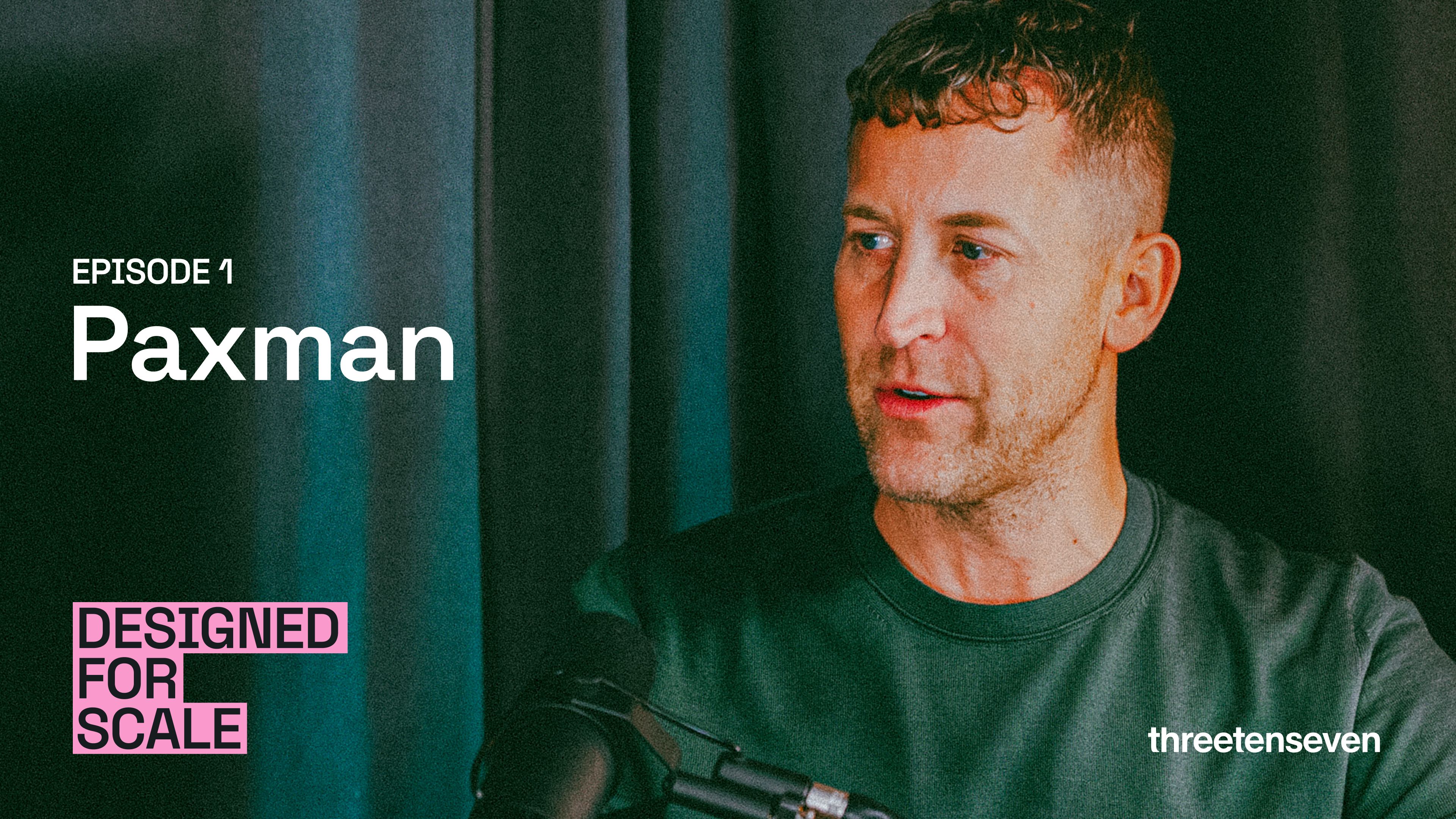
I'm Rachel Burrell-Cook, and this time I'm joined by Richard Paxman of Paxman Scalp Cooling. I will let you introduce yourself. Tell us who you are, where you're from. Hi, I'm Richard Paxman. I'm from Huddersfield and I am the CEO of a relatively local med tech company here in West Yorkshire and we have a device that's used to prevent hair loss for patients who undergo chemotherapy treatment.
So really managing one of those difficult side effects for patients across the world. And it's a type of thing that so many people will know people they love have benefited from what you make, but they won't really know the name. And it's a remarkable story. You've grown from being a refrigeration business, is that right? To now being a global med tech company, helped over 100,000 people, over 65 countries.
How does that journey happen? How do you go from where you were to where we are? Well, that sounds very grand, but yeah, I think like many businesses, it starts with a purpose. We've all been touched by cancer at some point in our lives, whether that be ourselves personally or a loved one. When I was 10 years old, my mum was diagnosed with breast cancer in the 90s.
And like many patients, you know, she was advised she would need cancer treatment, chemotherapy treatment and she hated the idea of losing her hair. She had beautiful curly hair. She was a gorgeous woman and she was young, she was in the 30s. So our local hospital here in Huddersfield was actually offering something called Cold Caps back then. And my mum, she's a very positive person, decided to give it a go and it didn't work.
And that was really the first time she was affected of the diagnosis and ultimately she had a very bad prognosis. Cancer in the 90s was very different than it is today, especially breast cancer. So seeing that distress, my dad started to look at, “Why didn't it work and what can we do to help patients in the future?" So you referred to him being in refrigeration. His father actually invented something called Ice Bank Beer Cooling Technology. So something we all love, of course, cold beer, or most of us do anyway.
So he started to look at, you know, the technology within the family and how could we improve what was already available to work for patients, whether that be in the UK or other parts of the world. So yeah, it's my mum's legacy. Unfortunately, she passed away. So it's something that we're so committed to for lots of different reasons. Amazing.
So you went, well, your dad took you from working in beer to scalps, which is a heck of a jump. When did you get involved? So yeah, so my father developed this product in sort of '97, along with his brother. They got VC investment in sort of 1999, 2000. I think still that's probably one of the hardest pieces of the business in terms of getting it accepted within the NHS, the adoption piece, which we always talk about in health tech.
So I came in at a little bit of an easier stage, I will say. So I joined the business in sort of 2008, 2009. There were eight of us, supplying to the National Health Service, doing a little bit of export, but not our major focus, very much dependent upon charitable funds in the National Health Service as well. So yeah, it was a time to sort of change that and have a bit of a redirection. And in terms of scale, which is what we're interested in talking about, especially today, you've gone from eight people then, and today 150?
Yeah, about 150, probably when this is published. So 150 people always recruiting, which is great. A large proportion of those are in the UK, which is what I want to continue, and in West Yorkshire, which is really important to me, so that the majority of the business sits here. And then we've got a US company with, I think, 30-odd, 40 people, some people in Canada, and then a couple of people dotted in different markets around the world, where we work direct and have either R&D facilities or direct sales and business development people. Wow.
And that's a serious growth journey. That's really impressive. And how's this year been so far? This year has been good so far. So we're a public entity, so I have to be careful on what I say, because we're in Q1, but we started with a positive momentum.
But last year, we finalised our accounts now, those are published. So we had a good year, less organic growth, more acquisition growth, which was exciting in itself. A good start, but I mean, a crazy year ahead, which is exciting. How has the weight of the personal story sort of shaped the way that you run the business, do you think? Is that still part of it?
Do you really feel that very tangibly? Yeah, I mean, our why is everything about our business. I think that's what's helped us persist through those really difficult times, both for Glenn's period of running the business and myself with my team and my SLT, without question. So it definitely drives our values. It makes us who we are, that purpose, more than many businesses, I guess.
So I think it's definitely shaped the company, but also my leadership style as well. Yeah, 100%. So getting a new medical device accepted by hospitals, trusts, whoever is funding it, is a notoriously, ridiculously hard journey. Was that then, was that Glenn, your dad, who dealt with some of those early conversations and getting it into the early adoption part of the process? 100%, yeah. So Glenn did the heavy lifting into the NHS and it was heavy lifting.
I mean, if you think about cancer in the '90s and even early 2000s, it's very different than it is in 2026 with the new drugs, you know, a breast cancer diagnosis is still a horrific diagnosis, but the options to a patient today are phenomenal. You go back 10, 15 years, it was not quite life or death, but it was very much focusing on the cancer, less about side effects. So launching a product in supportive care or side effect management into a market, is really focusing on survival as primary is difficult. So it was a hard slog, but ultimately got some support through charitable funds, which actually supported acquisition of the product into the National Health Service. So that really helped the sort of more snowball effect.
And that meant eventually we were in 99% of the National Health Service, which is where we are today, which is phenomenal with NHS budgets acquiring equipment, which is also important. They understand treating the patient as a whole is incredibly important there. Selling into the NHS is not easy, though. Lots of people, I mean, actually we get a lot of approaches from people who want our help selling into the NHS, which we say, yeah, absolutely, if you're sure, because actually it's a hard sell into the NHS because you're selling to one trust, not the whole NHS, as you might imagine. And actually export, I understand, is a big part of your business and is certainly something we advise on a lot of time as a primary strategy.
How does that feature in the story export versus domestic growth? Yeah, absolutely. So as I said, when I joined the business, we'd already established ourselves in the NHS. So doing reasonably well, but still a tiny business. I think adoption to NHS is incredibly difficult and we're very fortunate in West Yorkshire again that there's some great support and networks to support NHS adoption and that's only improving.
But when I joined in 2009, the clear opportunity for me was the rest of the world. So really developing a clear export strategy. Today, export for our business is 90%. So the UK is a really small fraction of what we do. It's an important piece in what we do because I think it's testimony to the rest of the world that if we can do it in the NHS, we can pretty much do it in any other developed medical system.
And it still holds weight, doesn't it? Selling into the NHS. It really does, yeah. I mean, it's world-renowned. Yes, it has its difficulties, but what other business like that wouldn't have its difficulties.
People do still look to the NHS as an exemplar, don't they? You know, best in class 100%. Yeah, and they will continue. Same with the R&D that comes out of this country. It's important, but our real growth needed to come from overseas and our biggest growth market, which is 60% of our business is the US.
And that for me, for any medical device company, must be at some point a priority in your journey. Why is it easier to grow there or why have you managed to dominate there? So I wouldn't say it's easier to grow. I think it's a very different culture. I think it's a very different health system in terms of how you get paid and the ability to make money out of the market.
I think it's different, but the investment is phenomenal. And the time to market can be long and you see a lot of failures, but when you get it right, which touch wood, I think we pretty much have done now, he says. Yeah, it can be a great market, a great opportunity and really help scale your business, which it did for us and continues to do. And we're only scratching at the surface. How much have you had to persuade the clinical community to take the principle of what you do, so scalp cooling seriously?
Was that a done deal? And so actually the cause was already understood or a need rather was already understood. Or was part of what you've had to do an education piece as well as a sales piece? Yeah, that's a really good question, a big education piece. So I think if you if I go back to sort of go and do an exhibitions and setting them up on my own and getting everything, you know, as you do as a small company of sort of unpacking the boxes, repacking the boxes in your suit and you'd stand there and literally people would walk past and sort of snigger to a certain way.
What's that? Scalp cooling. Scalp cooling doesn't work. It's not important. And that's that was tough.
But actually our investment into research and development. So basic science investment into clinical trials. I mean, we've got around 9,000 people in our clinical trials around the world from randomized control trials to real world evidence and then sort of just keep progressing working with these key opinion leaders around the world. It's changed. I mean, now we go to a conference and people know us and you know, we are leaders in what we do in side effect management, which is it's taken it's taken its time.
But it's yeah, it feels very different today. And I'm still packing boxes. Are you really? Yeah, cause I am what you do, isn't it? You got it with 150 people.
You're still packing. Still packing boxes. Not always. I'll have to be careful what I with my colleagues. They'll be like "No you don't!
You just stand there." Yeah, absolutely. I promise I do there's pictures. There's definitely pictures somewhere. What do you think you learned from the UK and the European rollout that you applied to the US? Was there anything that really did it?
Did it set you up well for that? They're so different. I've probably learned more from focusing on the US into other healthcare systems than I have the other way around. Okay, go on then tell us about that. So I think just just to step back So the NHS has given us the opportunity to say this can be adopted in a healthcare market and be used without barriers without with well, not without barriers, but you can break down the barriers and offer it in a socialised healthcare system.
The US market is so different. It's a privatised healthcare system. Everything is often sort of pay for use or fee schedule. So each time the device is used. So we pivoted going from selling capital equipment around the world to developing a model where we installed capital equipment and generated revenues on a per patient basis.
Interesting. Okay. So we did the clinical side of the regulatory piece. We did the sort of normal medical device regulatory piece and got clearances in 2016-17. What I hadn't done and what I've learned a lot about is ensuring that your products can be paid for appropriately.
Who's paying for your products at the end of the day? Who's been benefited by your product? And that's something in my naivety a number of years ago, didn't look at. Taking a step back again, we probably couldn't have afforded to look at both those channels. It was important to get to market and then figure out a clear go to market strategy.
So I've learned a lot about reimbursement, how that does or doesn't apply to other markets around the world. How important that is to really scale your business. So we've been on a long reimbursement journey in the US and spent horrific amounts of dollars on that strategy because it was a new device. There's nothing else like it. So you've got to sort of develop the coding strategy, the coverage strategy, the payment strategy, which takes a lot of time and effort.
But we're nearly there. I mean, we're not there yet, which is madness. So if you were going to do it again, what would you do differently when it comes to expanding into the US? Yep. So I would definitely follow the same sort of clinical pathway in terms of working with some of the best cancer centers to get good, strong clinical data.
Randomised data is still gold standard in my view from that perspective. Although real world evidence is becoming ever more important, which is key. But I would have started our reimbursement strategy much earlier. And that's exactly what we're doing from our new product development in the US market. So, you know, understanding that payment pathway early is critical.
So when you get to launch, you can be closer to a reimbursed product, which ultimately means revenue streams to the cancer center. But more importantly, patient access. So it's not out of pocket cost for patients, which is limits your growth. But also it's not fair, is it? I mean, a patient who can't afford, why shouldn't they able to access scalp cooling?
So it's about equity as well for me. You're selling to very different audiences here. We've got hospitals, oncologists, cancer patients themselves. How do you communicate to all of those or do you communicate to all of those as Paxman? Yeah, we communicate to all of them.
We've learned a lot over the years, I guess. But for me, you know, delivering what you say you're going to deliver to me is important to all those markets. But that authenticity piece, I think because we're purpose led, we've sort of we've got a story. We've got us. We've got strong values we share.
We can share those across. But then the messaging is obviously very different from a clinician perspective to an administrator perspective to a patient perspective. So yeah, we do have to approach them all in different ways. And that's evolved over time as well. And that's so important, that purpose piece when it comes to building trust and trust is the most important thing here.
I'm obsessed with it. We talk about all the time Yeah, it's so important. How do you maintain that consistency of message though? Good question. I have a fantastic marketing team, but a fantastic team full stop because it doesn't just sit with the marketing team, does it?
It sits with all of us. And you know, I think it goes back to understanding the values of the business. And yes, we might not all use exactly the same language, which might upset my marketing team. But but if it's coming from the right place and you know, we're talking about making decisions because of the patient and if it's the right decision for the patient, then it's the right decision for the business long-term, not always short-term. I think we can be consistent in our approach, not always our wording, but our approach.
Because it's true. I think that's the biggest thing. You're not making any of this up. It comes from a real story. You're doing it with real heart as well.
So even if you use a different phrasing, the reason you get out of bed in the morning is still the same across that, across the business, which is why people can trust you because you're, you just speak of the truth. You're not making anything up. It's not a marketing veneer or something that someone's thrust upon you, is it? 100% not, no. So you're now in 65 countries, which is serious international expansion and you're super modest, obviously. But what's how, how has that happened?
How much of that has been under you? What's driven it? How's it gone from from from one to 65? So 65, probably not the best idea just for anyone listening. And my head of international will probably shout at me, although she loves the new market as much as I do.
So when I first started, which was 2009, it was a few years ago. It's quite exciting going on an international journey. You are very quickly excited by a new market, a new distributor. And that's not always the right way. Yes, we did our due diligence to a certain degree, but it was probably a bit scattergun.
So we've got a few distributors in there that probably don't do as much as we would like. And but we've also got some great ones. I'm not saying they were bad decisions. Just perhaps focus is critical. So yeah, I probably lost my way over that question a little bit, but I think 65 is wonderful.
But but I think it's it should be a smaller number, more key focus to market. So we have those markets within that 65, but it's exciting. Some of that was under my leadership. And now I've got a great international team who do the majority of it. I spend most of my efforts in the US and developing markets like China, which we're currently working on at present.
So we're here talking about scale. And one thing, therefore, that I'm really interested in is the different routes to scale. We talk about organic versus, you know, investor led growth, appreciating that the the VC investment came before your stint. How does that come about? So the VC investment came in 1999, 2000, and they were at the VC.
It's a Swedish VC. And that's where our Swedish link is. They were looking at our competitors who are called Dignitana. And in their due diligence, they saw my dad doing his thing and they approached my dad, did their further sort of understanding of the business. We were a little bit further ahead at the time and they looked to make an offer.
The concept was to put us together all those years ago. But my dad was like “Never! This is not happening." Which was a good thing at the time. But yeah, things change. Because you've since acquired Dignitana.
Yeah. So we've had our own funding journey under my leadership, which has been doing an IPO on a small cap market and raised significant funds thereafter. But yeah, we acquired our competitor. I call it a merger because I think that's much nicer. But the auditors like me to call it an acquisition because it technically is.
But it's actually the merging of two brilliant companies and more importantly, brilliant people. So we've got, yeah, we acquired them mid last year. We've just gone through the integration piece. I've got colleagues in Dallas at the moment finalising some of the sort of more systems pieces. But as a people perspective and a technology perspective, we're pretty well integrated now.
And it was a significant acquisition as well. Yes, it was. Yeah. 11 million is the quoted price. Yep. So we were both public entities.
So it's actually a share swap. So it's not 11 million in hard cash. My investors would say differently because it technically is their shares that they've diluted as a shareholder as the same. But it made total sense. It's a great acquisition.
That's really exciting. And you must be really proud to have presided over that as well. Yeah, it was a learning curve. I mean, yeah, I mean, the whole of the last however many years I've been working at Paxman's a learning curve. It's not stopped from the different things that we're getting involved in.
But the acquisition was probably the most interesting just to start the negotiations and again, because we were both public entities. It's a very, very different process. And then now the integration piece, the culture piece, it's yeah, it's all been learning on the job. You can read a bit about it. We myself and the SLT and actually the whole team, we've all worked to make sure that it's been a positive one, which is not always easy in those sorts of circumstances.
But we've tried to uphold their values and integrate. So and what a journey that must be for your dad as well to go from “Over my dead body" to welcoming them in. How has he been? Do you know he's delighted. I think he's yeah, it was the right time.
It wasn't the right time then but I think if it was the other way around and they were acquiring us, he might have had something different to say, of course. But no, I think he's super proud that, you know, 20 years on, 20 odd years on in fact that we've got to this position. Well, let's look to the future now and you've helped over a hundred thousand patients so far. Is that right? Yes, our statistics annoyingly are not perfect on that because we track all patients in certain markets and not in some.
But we definitely know we've treated well over a hundred thousand patients but scratching at the surface. Yes, and that's what I wanted to touch on actually. So is it something like only one percent of eligible patients? I was using scalp cooling today. Yeah, so and that's across the world.
So looking at all chemo, all cancer patients, all patients who have chemotherapy. So there are markets which of course we have no presence in but even in the US with we're treating such a tiny patient population because of the barriers to access it and also where we are in our growth journey. So we need to change that and that's that's part of our vision. What do you think needs to change to make that happen? So from a US perspective, that's all about reimbursement.
So making sure that patients can access this without out of pocket costs or less out of pocket costs. I mean, you know, the health care, US health care system is difficult but rest of world, it's very much about us sort of building and investing into new markets to develop those markets fully. So again, we put a lot of time and effort in the US market because that's the biggest ROI. But at some point what we need to do is when we've got the return on investment from the US, we have to build our presence in other markets so we can allow access for patients. But that takes I mean, it takes time.
And investment in things like your brand and marketing and storytelling and partnerships, that sort of thing as well. Hugely, yeah, it's a whole host of things that we need to do. Yeah. What do you think needs to change beyond your community of people though to make change possible? Does there need to be any political or commercial context changes to allow people to have more access that 99% to get the access?
So I think every market is different. I think, I think, political, I mean, if you look at the US, there's currently legislation being passed to mandate scalp cooling. Really? Yeah, which is amazing. There's, I think, 13 states currently working on passing laws to make scalp cooling a necessary treatment, which is amazing.
Whether that can happen in other markets, I'm not sure. But that certainly will help progress this sort of challenge that we've got. But again, I think it's investment in reality. If you don't know about it, and we're not shouting about it, but like you said, that takes time. It takes money.
It takes investment and focus is really important. We could try and do this all at once everywhere, but we make really little impact. So we've got to try and not do the scatter-gun approach. I did in 2009, 2010, excited to get to Brazil and other markets, maybe personally as opposed to commercially. But, but yeah, focus on doing things right and then that will build and help.
And if you do it well in places like the UK and the US, that certainly has impact in other markets. What does the future look like for Paxman? What can you tell us? So future looks really, I mean, it's, we've done so much already, but as I said, it's that scratching the surface. We've got such an exciting opportunity for us for the next, you know, five, ten years.
Hopefully one day people won't lose their hair through chemotherapy, but we'll be doing something else by that point. I'm very sure. But it's about side effect management. So we're very good at scalp cooling at the moment, but we need to expand markets. We need to expand access.
So that will be a priority can continue to be. We need to improve our results with scalp cooling to help adoption and that's through research and development. So we've got ongoing clinical biological research looking at topical products as well as ongoing clinical trials looking at tweaks and changes to the protocols to improve overall efficacy. But then we've also got product development, which will launch this year in certain markets looking at chemotherapy induced peripheral neuropathy. Glad I said that perfectly.
Perfectly, but you're going to have to explain it. Yeah. So chemotherapy is, as I said before, is damaging many cells, healthy cells in your body and some of those cells are your nerve cells. So what you find is that chemotherapy is really creating this debilitating side effect of damage to the nerves. So patients are getting numbness and tingling in their fingers, both during chemotherapy and for a long time after, in fact, possibly all their life in certain cases that damage that stops you in the ability to do simple things that we take for granted, like doing your buttons, walking without tripping or falling, needing a stick.
And there's all sorts of issues that come with with peripheral neuropathy. So we've got a number of clinical trials ongoing across the world. We've got one in Singapore, which is where our research started. So with the National University of Singapore, we've got about 120 patients in that now We've done some data readouts looking really promising. So seeing a 95% reduction in chemotherapy induced peripheral neuropathy grade two, which is phenomenal.
We've got a large study ongoing also in the US. So we're at about 600 patients out of 777. So 25 locations sponsored by the NIH. So again, testimony to how important it says. So we'll launch that product in 2026, 2027, which is phenomenal.
And then thereafter, I think for me, long-term vision, managing side effects for cancer patients is going to be key for our journey. Adults mostly, do you think? Or will you move into children? We'd love to move into paediatrics. It's considered a more difficult place to get to.
We've got an ongoing clinical trial at St Judes in the US and we will look to do something longer term. It's a bit about focus. I think if we can get it right for the adults first, there are opportunities with children in a non-hematological setting going forward. It is a different beast though, isn't it, in paediatrics? I know we did some work with Cancer Research Horizons a couple of years ago.
We created for them a brand called C-Further, which is a consortium between LifeArc Cancer Research Horizons and GOSH in the UK. And that was all around trying to advance treatments for children's cancer because often children are treated like miniature adults. So they're just given smaller doses of adult drugs, etc., which leaves them with really long-term lifelong side effects. So much has got to change just about the treatment as well as the treatment management as well. I totally agree with that.
And yeah, I think there's more research that needs to be done. And especially in the, like you said, the side effect management piece, we've been having early talks on peripheral neuropathy for children. And you think about maybe a 40, 50, 60 year old person having neuropathy. You think about a child having neuropathy and living with that effect in their life for the whole of it, which is horrendous. So we have to do something about it, but I have to focus as well and make sure we can first develop what we're doing in an adult setting and then look at how we can support.
For scalp cooling, for example, we have a project with Project Youth Cancer and we actually provide free scalp cooling for patients who are eligible in a sort of paediatric setting as well, often teenagers. Amazing. The point about focusing and needing to focus, I wish someone had told me that a few years ago when I started working in this role, it's the only way you grow, I think, personally, is by being really focused. And as a company, that's exactly what you are. So it sounds like you embody that as a leader as well.
I try to. It's hard. Yeah. Oh, something shiny. Yeah, yeah, absolutely.
Brazil. Absolutely. Yeah. Brazil is quite cool. So we end every episode by asking our guests to tell us who they think we should speak to next.
So to pay it forwards and I want to know who you think is a founder or CMO who's doing amazing things, who's scaling their health tech business in a way that we need to talk about. So I am not actually going to give you a health tech company, but I'm going to give you a bit of a shout out for the region, I think, and West Yorkshire as a whole. I actually chair the health tech cluster in in West Yorkshire and there are so many incredible health tech businesses that I think we should be shouting about whether they start up scale ups or well established. But I think what we need to understand and what we should be also talking to is is is some of those support resources that are making those businesses really viable today. So whether it be the local universities here supporting growth and research and development, whether it be the Yorkshire and Humber Innovation Networks, whether it be MediLink or many other organisations.
I mean, being in health tech in West Yorkshire today is probably the best part of the country to start a health tech company, you know, run a health tech company. It's phenomenal. I would love to see other organisations like ourselves who benefited those from those and talking about, you know, how they've been supported on their journey. Yeah, I absolutely agree with that. There's so much happening, especially with the Investment Zone in West Yorkshire.
The funding is here as well for people. So I think it's I think it's just going to grow and grow, which is why we're so excited to talk to you because you are an absolute poster boy of West Yorkshire Health Tech, but just doing so much globally as well. So it's really impressive. Thank you so much for sharing your story. Pleasure.
Thank you for inviting. Absolute pleasure.